

Houston T-bone Accident Lawyer
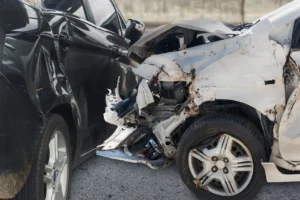 T-bone accidents cause about 8,000 fatalities annually in the United States, as reported by the National Highway Traffic Safety Administration. In 2019, these accidents made up 18% of all traffic fatalities. This statistic highlights the significant impact of these incidents on road safety.
Drivers are almost always blindsided in T-bone accidents, making it difficult for them to take evasive actions to avoid the impact. A T-bone accident can lead to life-altering injuries that may affect a victim’s ability to work, raise a family, or live independently.
For victims to seek legal representation and recover compensation for their damages, at Calhoun Meredith, PLLC, we are dedicated to helping you with your case and securing the compensation you deserve.
Call us today at 832-430-6210 for a free consultation to speak with our experienced Houston car accident attorneys and get the support you need.
Can a Driver Be Partially at Fault for a T-Bone Accident in Houston?
A T-bone accident occurs when the front end of one vehicle collides with the side of another, forming a ‘T’ shape. This type of collision, also known as a side-impact or broadside accident, can lead to significant damage and serious injuries, primarily because vehicles have limited protection on their sides. Determining fault in T-bone accidents is essential, as it influences liability and potential compensation.
In many cases, the driver who fails to yield the right of way at a stop sign or traffic light is deemed at fault. However, the determination of fault can be complex. Situations may arise where both drivers share responsibility for the collision, leading to the concept of partial fault. This shared responsibility can complicate claims, particularly when both parties assert they have the right of way.
No driver is immediately considered at fault in a T-bone accident; a thorough examination of evidence is necessary to establish liability. Important factors include traffic signals, witness statements, and accident reconstruction. Law enforcement and insurance companies typically conduct these evaluations. Partial fault can significantly affect the outcome of a car accident case, potentially resulting in lower compensation for the parties involved.
Additionally, right-of-way violations are a common cause of T-bone collisions, and in some cases, a third party may also be involved. If both drivers deny fault, the situation becomes more complicated, requiring careful consideration of all details to accurately determine liability.
Common Scenarios Where Both Drivers May Be at Fault
Certain commonplace scenarios, including intersection collisions, left-turn accidents, and parking lot accidents, can result in both drivers being partially accountable for a T-bone accident.
Intersection Collisions
Intersection collisions are a common cause of T-bone accidents and often involve complicated fault determinations. Both drivers may share responsibility if one driver runs a red light and the other fails to stop at a stop sign. Right-of-way violations are common when determining fault in T-bone accidents.
Speeding and reckless driving significantly impact the determination of fault in these collisions. Distracted driving, such as texting or eating, or drunk driving is another factor in establishing fault. If both drivers acted negligently, they can both share fault in a T-bone collision.
Left-Turn Accidents
Left-turn accidents are another common scenario where both drivers may share fault. The driver making the left turn is typically considered at fault if they did not yield the right of way to oncoming traffic. Both drivers could share fault if:
- The left-turning driver misjudges the light and the oncoming driver is speeding
- The left-turning driver fails to signal their intention to turn
- The oncoming driver runs a red light or fails to yield to the left-turning driver
The driver going straight may be found partially at fault for the accident if they were speeding or ran a red light because these actions could have contributed to the accident. A driver making a left turn can also be found at fault if they misjudge the timing and collide with an oncoming vehicle. In situations where the person turning left couldn’t see the oncoming car due to traffic on the other side also turning left and blocking the view, both drivers may share partial fault for the accident.
Parking Lot Accidents
Parking lot accidents can also involve shared fault, particularly when one driver is backing out carelessly and another is speeding through the lot. If one driver is backing out and another driver fails to yield, both can be partially responsible for causing a T-bone collision. Drivers leaving a parking lot are responsible for ensuring that traffic is clear to avoid collisions.
Comparative Negligence in Texas and Legal Implications of Partial Fault
Texas operates under a modified comparative negligence rule, allowing individuals to recover compensation for an accident as long as they are less than 51% at fault. If you are found to be 51% or more responsible for the accident, you cannot recover any damages. This rule is designed to ensure that only those who are primarily responsible for their injuries are barred from receiving compensation.
Under this system, if you are partially liable for an accident, your compensation will be reduced proportionately based on your percentage of fault. For example, if you are determined to be 30% responsible for a T-bone accident and awarded $100,000 in damages, you would receive $70,000 after fault adjustments. This approach acknowledges the potential for multiple parties to share liability, confirming that a driver can indeed be partially at fault for a T-bone accident.
The determination of fault involves a careful examination of the evidence and circumstances surrounding the incident. Factors influencing compensation include the specifics of the case, the severity of injuries, and the degree of fault assigned to each party. Understanding your fault percentage is essential for determining the amount of compensation you may be eligible to receive.
To protect your rights and ensure you receive fair compensation for your injuries and damages, it is important to seek legal assistance. An experienced Houston car accident lawyer can guide you through the complexities of the process and advocate for the compensation you deserve.
How Insurance Companies Determine Fault
To determine fault, insurance companies look at various types of evidence, including:
- Witness statements
- Police reports
- Accident reconstruction
- Traffic camera footage
- Traffic signals
- Eyewitness statements
Investigators will analyze the circumstances of the accident using these pieces of evidence. Police reports provide an unbiased account of the incident and are crucial in determining fault.
Accident reconstruction experts may analyze vehicle speeds and points of impact to help determine fault. Key evidence includes:
- Photos
- Videos
- Skid marks
- Vehicle damage
- Vehicle ‘black box’ data
In this process, each insurance company works to ensure a fair outcome for their clients.
[Related: How is Fault Determined After a Car Accident in Houston, TX]
The Role of Witness Statements in Establishing Fault
Witness statements help determine fault in T-bone accidents. These accounts provide an unbiased perspective of the events leading up to the collision. Witnesses can offer detailed observations that may not be immediately apparent to the drivers involved, such as whether one driver ran a red light or if another was speeding.
In many cases, witness statements can support or contradict the accounts given by the drivers, helping to clarify the situation. This can be especially important when both drivers claim they were not at fault. By providing an external viewpoint, witnesses can help reconstruct the sequence of events and establish a clearer picture of what happened.
Additionally, witness statements can be instrumental in identifying factors like distracted driving, reckless behavior, or traffic signal malfunctions. These details can significantly impact the determination of fault and the outcome of any legal proceedings or insurance claims.
The inclusion of witness statements adds a layer of credibility and detail to the investigation, making them invaluable in the process of establishing fault in T-bone accidents.
3 Steps to Take If You Believe You Are Partially at Fault
If you suspect your actions contributed to a T-bone accident, taking these 3 steps can help protect your rights and build a solid case:
1. Gather Evidence
Gathering evidence helps build a strong case and determine fault. Ensure safety and health first by moving to a safe place and calling the police. Exchange insurance and contact information with the other driver. Document the scene by:
- Taking pictures of all vehicles
- Capturing the accident scene
- Documenting traffic control devices
- Noting signs and road markings
- Photographing skid marks
- Recording any other damaged items
Write down what you remember happened and any statements from witnesses. Your personal injury attorney from Calhoun Meredith, PLLC will gather various forms of evidence, including witness statements and medical bills, to establish liability and the extent of damages.
2. Seek Medical Attention
Seeking medical attention immediately after the accident will confirm your injuries are documented and ensure your overall health. Even if you do not feel injured, some injuries may not be immediately apparent. Documenting injuries through medical records establishes the severity of damages.
Medical records will serve as evidence in your personal injury claim and help prove the extent of your injuries and their impact on your life. Do not delay seeking medical attention, as it can affect both your health and your legal case.
3. Contact a Car Accident Lawyer
Contacting a car accident lawyer from Calhoun Meredith, PLLC can help you in the following ways:
- Help you understand and navigate the complexities of partial fault to ensure fair compensation for your damages
- Maximize your compensation and reduce stress after a T-bone accident
- Protect you from being taken advantage of during settlement negotiations
At Calhoun Meredith, PLLC, we can help with achieving deserved compensation and building a strong case. We can assist by collecting and preserving evidence, ordering records, and appearing in court if necessary.
[Related: What Does A Car Accident Attorney Do?]
How Calhoun Meredith, PLLC Can Help You
At Calhoun Meredith, PLLC, our accident attorneys can:
- Protect your rights
- Prevent the at-fault party’s insurers from exploiting you during the settlement process
- Understand the intricacies of partial fault in T-bone accidents
- Ensure that you receive the compensation you deserve for your injuries and damages.
Our dedicated car accident attorneys help in:
- Gathering evidence
- Probing the accident to ascertain liability
- Negotiating with insurance companies on your behalf to procure just compensation for your injuries and damages
Our goal is to ensure that you receive the compensation you deserve. Trust our experienced car accident attorney to build a strong case and advocate for your rights every step of the way.
If you or a loved one has been involved in a T-bone accident, contact Calhoun Meredith, PLLC today to ensure you receive the compensation you deserve. Our experienced car accident lawyers are here to help you every step of the way.
Call us now at 832-430-6210 for a free consultation and take the first step towards securing your rights and your future.
Frequently Asked Questions
Can I still receive compensation if I was partially at fault for a T-bone accident?
Yes, you can still receive compensation if you were partially at fault for a T-bone accident. Texas follows a modified comparative negligence rule, which allows you to recover damages as long as your fault does not exceed 50%. The amount of compensation you receive will be reduced by your percentage of fault.
What evidence is most important in proving fault in a T-bone accident?
Key pieces of evidence include police reports, witness statements, and traffic camera footage. These can provide an unbiased account of the incident and help establish who had the right of way. Photos of the accident scene, skid marks, and vehicle damage are also crucial in determining fault.
How does a third party’s involvement impact fault determination in a T-bone accident?
If a third party is involved, such as a pedestrian or another vehicle, it can complicate the determination of fault. The third party’s actions will be scrutinized to see if they contributed to the accident. In such cases, liability may be shared among all parties involved, affecting the overall compensation each party can claim.
What are my legal options if the other driver denies fault in a T-bone accident?
If the other driver denies fault, you can gather evidence to support your claim and seek legal assistance to build a strong case. Witness statements, police reports, and accident reconstruction can be particularly useful in these situations. Legal representation can help ensure that your side of the story is effectively presented.
Can traffic signal malfunctions affect fault determination in a T-bone accident?
Yes, traffic signal malfunctions can significantly impact fault determination. If a traffic light was not functioning correctly, it could be a contributing factor to the accident. In such cases, the responsibility may also fall on the entity responsible for maintaining the traffic signals, potentially altering the distribution of fault.
Free Case Evaluation
Fields Marked With An “*” Are Required
"*" indicates required fields
Disclaimer: By providing my phone number to Calhoun Meredith I agree and acknowledge that Calhoun Meredith may send text messages to my wireless phone number for any purpose. Message and data rates may apply. Message frequency will vary, and you will be able to Opt-out by replying “STOP”. For more information on how your data will be handled please see our privacy policy.
Privacy Policy: No mobile information will be shared with third parties/affiliates for marketing/promotional purposes. All the above categories exclude text messaging originator opt-in data and consent; this information will not be shared with any third parties.
Schedule An Consultation
© Copyright 2026 Calhoun Meredith. All Rights Reserved.
