

What Happens if I’m Hit by a Car While on a Bike?
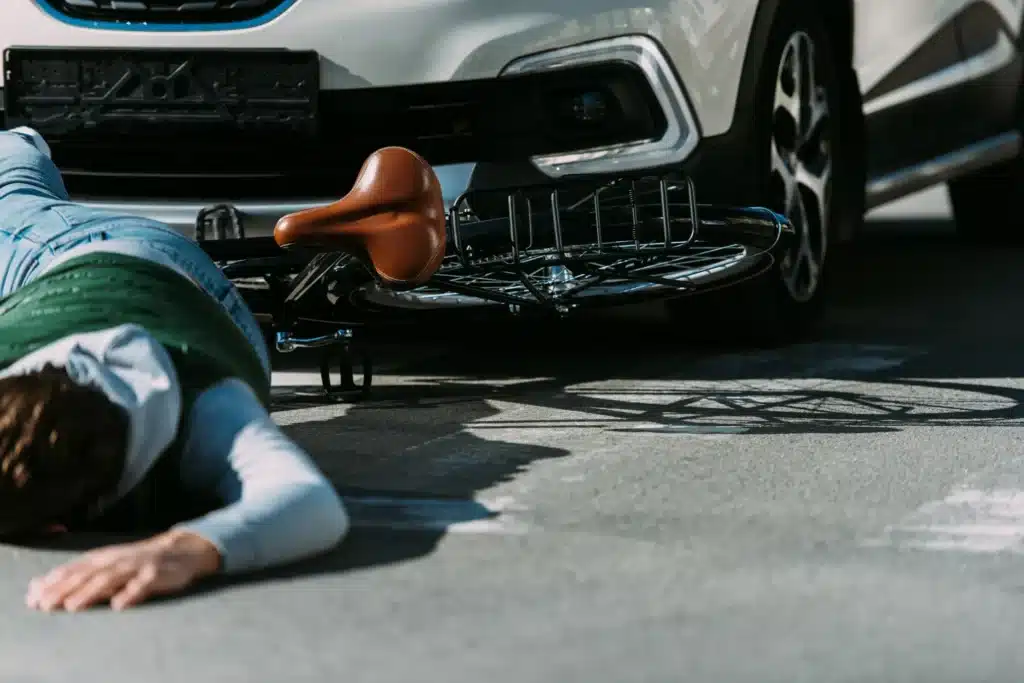 Bicyclists are among the most vulnerable users of local roads. Although drivers are required to maintain safe distances from cyclists and share the road, they often fail to do so.
When a collision happens at a Texas crosswalk or on a roadway, the consequences for the bike rider can be serious or even life-threatening. The collision’s aftermath can leave bicyclists contending with unexpected financial hardships and a long and uncertain recovery.
At Calhoun Meredith, PLLC, we help injured cyclists take control of their legal options. From dealing with insurance companies to investigating the driver’s actions, we know how to build a strong case from the start.
If you’ve been hit while biking in Texas, call 832-430-6210 for a free consultation. If we accept your case, you will not have to worry about upfront fees.
What Should I Do Immediately After a Bicycle Accident?
The steps you take following a bike accident can affect your ability to pursue compensation later on. The aftermath of a collision can be incredibly jarring, but try to keep these tips in mind:
- Call 911 and request both police and medical assistance. This will generate a police report.
- Get the driver’s contact and insurance information without arguing or admitting fault.
- Take photos of your injuries, your bike, the car, the road, and any traffic signs.
- Talk to witnesses and get their contact details.
- Seek medical attention, even if you don’t feel hurt right away. Some injuries show up hours or days later.
Once you are able to do so, seek legal representation. Your attorney can represent you throughout the claims process so you receive maximum compensation for your injuries and emotional hardships.
What Types of Injuries Are Common in Bicycle Accidents?
Even at low speeds, a collision with a car can lead to serious injuries. Some cyclists become disabled as a result of the physical trauma from a collision. Common injuries can include:
- Traumatic brain injuries
- Broken bones
- Spinal cord injuries
- Internal bleeding
- Organ damage
- Road rash
- Lacerations
These injuries can lead to extended hospital stays, time off work, and months of physical therapy. Texas’s personal injury laws allow injured victims to use the courts to pursue fair compensation for the financial losses and emotional trauma they suffered due to a bicycle collision.
Who Is Financially Liable When a Car Strikes a Cyclist?
Fault in an e-bike accident or bicycle accident often comes down to driver negligence. In some cases, a motorist may violate a traffic law, leading to a collision.
Some drivers may be found to have intentionally caused the accident or acted with gross indifference when passing a cyclist. Common driver and passenger behaviors that can lead to liability include:
- Failing to yield at intersections
- Turning without checking for bikes
- Opening a car door into a cyclist’s path
- Speeding or distracted driving (especially texting)
How Comparative Fault Could Affect Liability
Texas follows a comparative fault rule. This means that injured victims can pursue compensation when they are partly to blame for causing the accident as long as they are less than 50% at fault.
One example of shared fault could involve a cyclist riding outside designated bike lanes at the time of the accident. If they are found to be 20% at fault, they would only be eligible to receive 80% of any eventual settlement.
How Can I Be Compensated Following a Bike Collision?
Compensation following a bike collision typically comes from the at-fault driver’s insurance carrier. Once fault is established, your lawyer can negotiate a fair settlement with the insurance carrier.
If the driver is uninsured or underinsured, or if the collision involved misconduct, the civil courts may be a more effective forum for securing fair compensation for:
- Medical expenses
- Lost income
- Pain and suffering
- Bicycle repairs or replacement
In cases where the driver flees the scene of the accident and cannot be found, your attorney can negotiate with your insurance carrier if you have uninsured/underinsured motorist (UM/UIM) coverage.
If the case goes to court, you may receive compensation through a settlement. Most cases are resolved without going to trial, but a trial could potentially lead to punitive damages aimed at punishing the at-fault driver for causing you harm.
Take the Next Step by Contacting Calhoun Meredith, PLLC, Today
Don’t wait to get help. The sooner you act, the easier it is to preserve evidence, build a case, and protect your rights. Contact our office online or call Calhoun Meredith, PLLC, at 832-430-6210 for a free consultation.
We’re available 24/7 and only get paid if we win your case. There are no upfront fees, just reliable and proven support when you need it most.
Free Case Evaluation
Fields Marked With An “*” Are Required
"*" indicates required fields
Disclaimer: By providing my phone number to Calhoun Meredith I agree and acknowledge that Calhoun Meredith may send text messages to my wireless phone number for any purpose. Message and data rates may apply. Message frequency will vary, and you will be able to Opt-out by replying “STOP”. For more information on how your data will be handled please see our privacy policy.
Privacy Policy: No mobile information will be shared with third parties/affiliates for marketing/promotional purposes. All the above categories exclude text messaging originator opt-in data and consent; this information will not be shared with any third parties.

Schedule An Consultation
© Copyright 2026 Calhoun Meredith. All Rights Reserved.
